

Recovery is shaped not only by treatment, meetings, or sobriety milestones, but also by the environment a woman returns to each day. The tone of a home, the people in it, the level of structure, and the way stress is handled can all influence whether recovery feels supported or disrupted.
A supportive recovery environment is not about perfect comfort. It is about creating enough consistency, respect, accountability, and stability for healing to take hold.
This guide explores what makes a recovery environment feel emotionally safe, what warning signs can quietly make recovery harder, and what women often notice when the right support is in place.
Why Environment Matters More Than Many Women Realize?

Recovery does not happen only in therapy, outpatient sessions, or support meetings. It also unfolds in the ordinary moments of daily life, which is why environment can have such a strong influence on stability and progress.
A supportive environment often helps recovery feel steadier by making it easier to:
- follow routines and maintain structure
- manage stress without constant emotional overload
- feel more predictable and less overwhelmed day to day
- stay focused on recovery instead of reacting to chaos
- build momentum through consistency and healthier habits
A calm, structured setting can quietly support healing, while an unstable one can make recovery feel heavier than it needs to. Many women begin to notice that recovery feels different once life becomes more emotionally steady, which is explored further in Why Recovery Feels Different When You Finally Feel Safe.
Why Environment Matters More Than Many Women Realize?
A supportive recovery environment usually feels consistent, respectful, stable, and recovery-oriented. It includes clear expectations, accountability without shame, healthy boundaries, and people who support healing instead of undermining it. Rather than adding chaos, it reduces unnecessary stress and gives recovery room to become part of everyday life.
Why Emotional Safety Is About More Than Comfort?

Comfort and emotional safety are not the same thing. Comfort often means familiarity or ease. Emotional safety is deeper. It is about whether an environment supports recovery without constant stress, criticism, or instability.
A place can feel familiar and still make recovery harder. What matters is whether the environment creates stability and supports growth.
What emotional safety often looks like
- predictable routines and expectations that reduce confusion and uncertainty
- respectful communication instead of criticism, tension, or emotional volatility
- healthy boundaries around time, privacy, space, and emotional responsibility
- support during difficult moments rather than judgment, blame, or withdrawal
- emotional steadiness that helps women regulate instead of staying in survival mode
- accountability without shame, so recovery still includes honesty and follow-through
When those pieces are missing, women may spend more energy managing chaos than focusing on recovery. A healthy recovery environment does not remove accountability. It simply makes growth feel more possible by reducing unnecessary emotional strain, which is also part of Why Sobriety Can Feel Harder After the First Few Months can resonate with women trying to understand why recovery sometimes feels heavier in the wrong environment.
Five Signs of a Supportive Recovery Environment
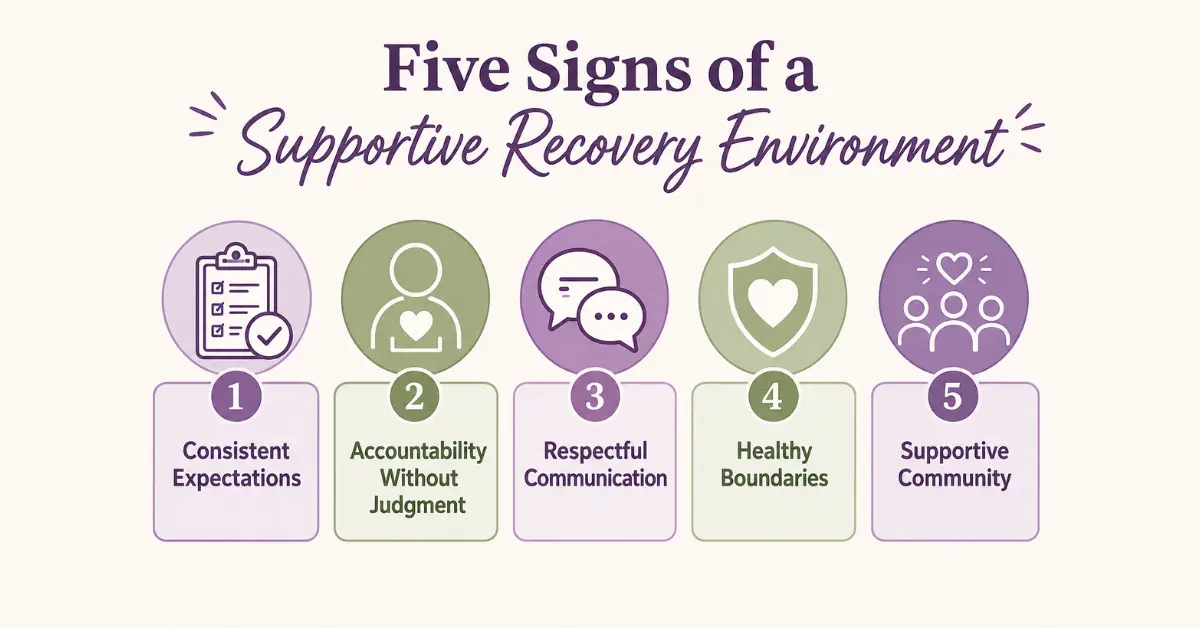
These signs can help women evaluate whether a home, sober living setting, or current living situation is truly supporting recovery.
Consistent Expectations
Supportive environments usually have clear rules, routines, and responsibilities. Women know what is expected of them and what they can expect from the people around them.
That may include:
- house routines or curfews
- recovery participation expectations
- shared responsibilities
- clear responses when issues come up
Consistency reduces confusion and lowers emotional strain. When daily life feels more predictable, women can focus more fully on recovery.
Accountability Without Judgment
Recovery needs accountability, but accountability should not feel humiliating. A healthy environment addresses concerns directly without turning every setback into a source of shame.
That can look like:
- honest check-ins after a difficult week
- encouragement to correct course instead of hide mistakes
- responsibility without harsh labeling or emotional punishment
This kind of accountability makes it easier to stay honest, which is essential in recovery.
Respectful Communication
are addressed clearly and respectfully, even when conversations are hard.
Supportive communication usually means:
- less yelling, mocking, or passive-aggressive tension
- more clarity when problems arise
- fewer emotional power struggles
- a stronger sense that conflict can be handled without chaos
That emotional steadiness can reduce stress and help women stay engaged in recovery rather than shutting down.
Healthy Boundaries
Boundaries are one of the clearest signs of a healthy recovery environment. Without them, women can end up carrying other people’s stress, losing structure, or feeling emotionally pulled in too many directions.
Healthy boundaries may include:
- privacy and personal space
- rules that protect sobriety and routines
- emotional limits that reduce codependency or chaos
- structure around sleep, recovery time, and household expectations
Women who want to better understand how close relationships affect stability may also find Family Support and Women’s Sober Living helpful, especially when family dynamics are part of the recovery picture.
Supportive Community
A supportive recovery environment does not have to feel intensely social, but it should feel connected. Women often do better when they are surrounded by people who respect recovery, reinforce healthier choices, and understand that healing takes consistency.
Supportive community can mean:
- peers who encourage follow-through
- staff or house leaders who create structure
- people who understand setbacks without normalizing self-destruction
- a setting where recovery is treated as something worth protecting
Connection matters because recovery often becomes harder when women feel emotionally alone in the middle of it.
How Unstable Environments Can Quietly Affect Recovery?
Not every unhealthy environment is dramatic. Sometimes the strain is quieter.
A home may look functional from the outside while still feeling emotionally draining inside. Plans change constantly. Boundaries are weak. Communication swings between support and criticism. Women may feel like they never know what version of a person or situation they are going to get. Over time, that uncertainty can be exhausting.
How instability can affect recovery
- it increases stress and emotional fatigue
- it makes routines harder to maintain
- it keeps women focused on managing other people instead of themselves
- it reduces the sense of safety needed for honesty and vulnerability
- it can make progress feel inconsistent even when effort is real
In these environments, recovery often feels harder not because a woman is failing, but because the setting around her keeps demanding emotional energy that recovery also needs.
This can be especially difficult after treatment, when structure naturally changes. Some women benefit from support that keeps recovery routines in place during that transition. That is one reason outpatient treatment and sober living can be such an important combination for women who need both flexibility and structure.
What Women Often Notice When Recovery Starts Feeling Safer?

When a recovery environment becomes more emotionally safe, the changes are often subtle at first. Over time, those smaller shifts can build into greater stability, confidence, and consistency.
Common changes women may notice
- less emotional exhaustion at the end of the day
- more consistency with routines and recovery habits
- fewer impulsive reactions during stressful moments
- better follow-through with meetings, therapy, work, or responsibilities
- stronger self-trust and more confidence in daily decisions
- a growing sense of stability instead of constant chaos or emotional overwhelm
A safer environment can also make daily life feel less emotionally loud by reducing the need to constantly manage conflict, criticism, or unpredictability. That often leaves more energy for recovery itself.
Over time, women may find it easier to regulate emotions, ask for help, recover from difficult days, and trust their own progress. Lifestyle support can play a role too, which is one reason Can Pets Help Support Recovery and Emotional Stability resonates with women exploring what helps them feel more grounded.
Recovery Often Feels More Manageable in the Right Environment
A supportive recovery environment cannot eliminate every challenge, but it can make healing feel more stable, realistic, and sustainable. When women have structure, respect, accountability, and support around them, recovery often stops feeling like something they have to protect entirely on their own.
The right environment may look different from person to person. For one woman, it may mean women’s sober living with clear routines and peer support. For another, it may mean combining structured housing with outpatient care, healthier boundaries, and a more stable daily rhythm. What matters is whether the environment supports recovery rather than quietly undermining it.
If you are trying to figure out whether your current environment is helping recovery or making it harder, it may be worth talking through what kind of support would actually feel stabilizing right now.
Confidential. No pressure. Just a conversation about what support may help recovery feel more stable.
Frequently Asked Questions About Recovery Environments
What makes a recovery environment supportive?
A supportive recovery environment usually includes consistency, healthy boundaries, respectful communication, and accountability without shame. It should reduce chaos and make it easier for women to stay engaged in recovery routines.
Why does environment matter during recovery?
Recovery happens in daily life, not only in treatment. The environment around a woman can either support stability or add stress, unpredictability, and emotional exhaustion that make recovery harder.
How can I tell if my environment is helping recovery?
A helpful environment usually feels predictable, respectful, and structured. If daily life feels tense, draining, or destabilizing, the environment may be working against recovery.
What should I look for in a sober living home?
Look for clear expectations, healthy boundaries, respectful communication, accountability, and a recovery-focused culture.
Can stress affect recovery stability?
Yes. Ongoing stress can drain emotional energy and make routines, self-reflection, and healthy decision-making harder.
Why do supportive communities matter during recovery?
Supportive communities reduce isolation, reinforce accountability, and help women stay connected to recovery.